
The voting date is right around the corner and support for the insertion of “Chapter IX – The Aboriginal And Torres Strait Islander Voice” into the Australian Constitution is slumping, according to recent polls.
Prime Minister Anthony Albanese has labelled the proposed change “modest” and “balanced” – is it really?
What Australians are being asked to vote on consists of the following three paragraphs:
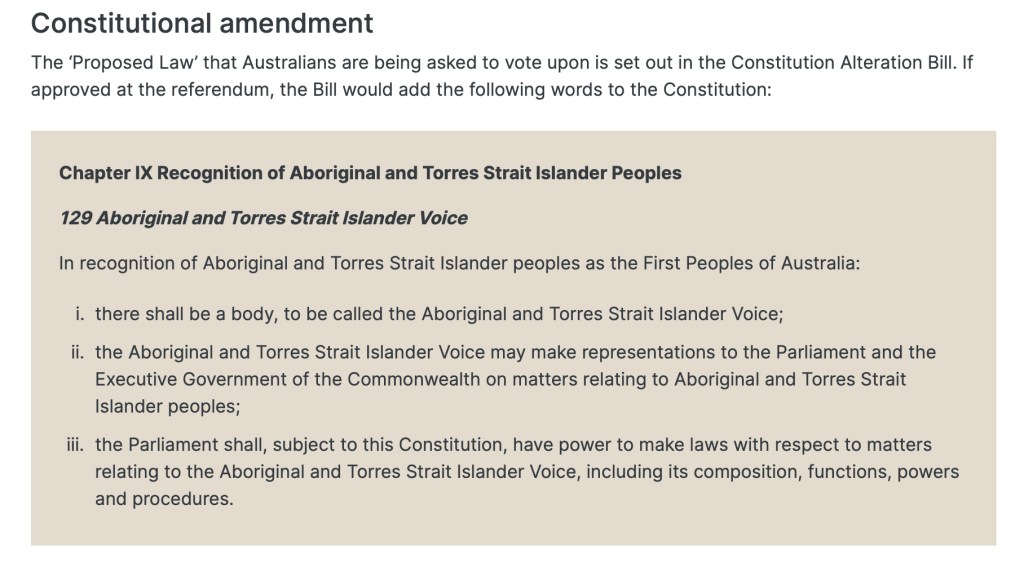
Other than those three points, there is no legislation drawn up for this Voice. That part comes after Australians have cast their votes, with the expectation that the politicians of the time will draw up fair, balanced, and “modest” legislation. The Australian Public will have no part in this process and will have no say in the laws that come to pass through The Voice, no matter what they may be.
A big concern for many is the lack of certainty and confirmation surrounding what constitutes an Aboriginal and Torres Strait Islander matter outlined in paragraph 3. With no established parameters or limitations, there has been suggestion that something approximating a “land tax” for Indigenous people may be deemed such a matter, and subsequently dumped on Australian Taxpayers.
It seems, however, that this is far more than mere speculation.
Retrieved from the National Indigenous Australians Agency’s (NIAA) through the Freedom Of Information Act, a 26-page document titled “Document 14” has been revealed, allegedly outlining the full extent of the “Uluru Statement From The Heart.”
Through the use of “The Voice”, it outlines how a “Treaty” would be enshrined in the constitution.
“Treaty would be the vehicle to achieve self-determination, autonomy, and self-government. In relation to content, the Dialogues discussed that a Treaty could include a proper say in decision-making, the establishment of a truth commission, reparations, a financial settlement (such as seeking a percentage of GDP), the resolution of land, water and resources issues, recognition of authority and customary law, and guarantees of respect for the rights of Aboriginal and Torres Strait Islander Peoples.”
Of the participants involved in the Uluru Statement, those involved in the Hobart dialogue stated that “a treaty “must include” land and sea rights, “a fixed percentage of gross nation [sic] product” through “rates/land tax/royalties” and “Aboriginal control”.
Albanese seems to have a team very committed to this Treaty Idea with Thomas Mayo, a campaigner of the “Yes” Campaign saying The Voice is “the best chance to shape treaty.”
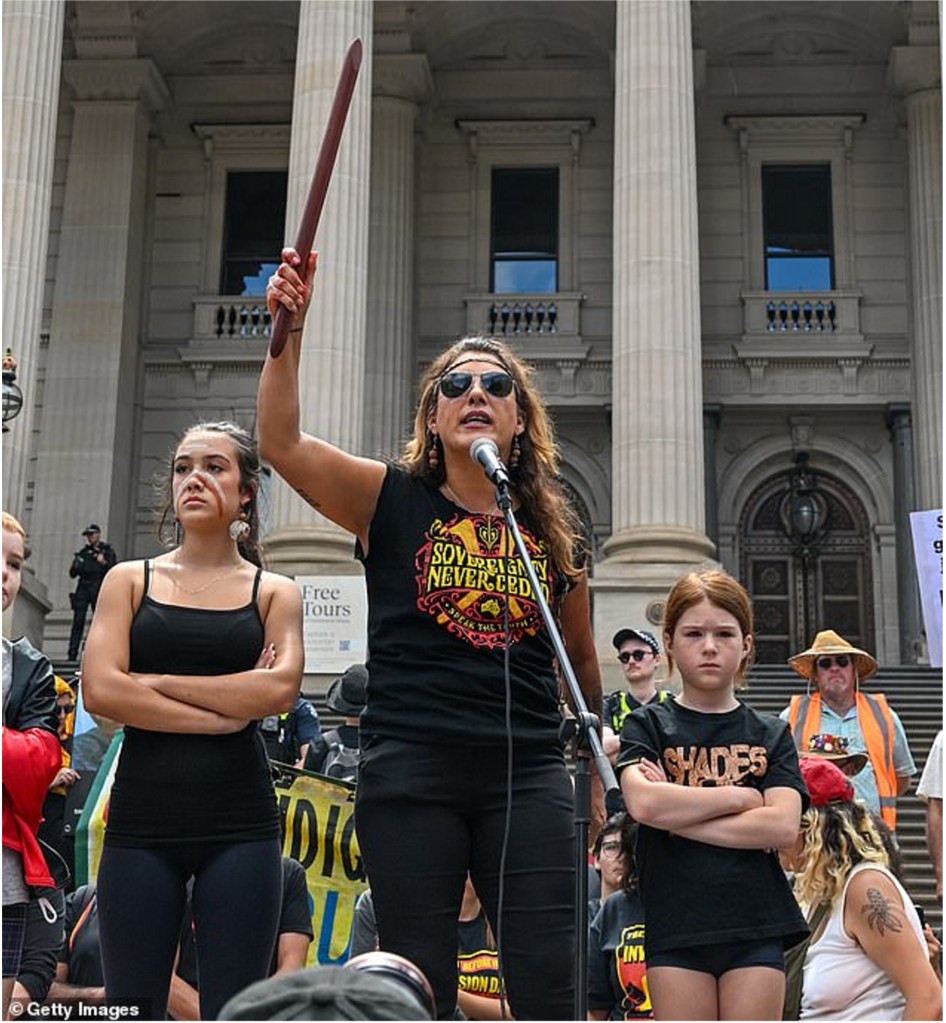
Former Greens Senator, Lidia Thorpe, also confirms many Australians’ worst fears as she has been extremely vocal about her support for a “pay-the-rent” scheme, where Australian Property Owners would pay a weekly rent tax to Indigenous groups based on their ancestral claim to the land, despite the already severe cost-of-living crisis currently impacting millions of Australians.
She goes even further to demand the establishment of a “Blak Republic” – a complete upheaval of our Constitutional Government in favour of an Ethnically Determined Australian Republic which would include the proposed Tax Scheme, as well as a complete rewrite of the Australian Constitution and a minimum of 10 black representatives in Parliament.
In her words, Thorpe says the Aboriginal-led Australian Republic would allow indigenous people to “take back what was ours in the first place and share it in a way that we know how best to do.”
Through The Voice, recommendations like these can be made to Parliament and laws can be passed in accordance with the recommendations if the demand is strong enough. Of course, the above-mentioned Treaty could and would, it seems, be enforced too.
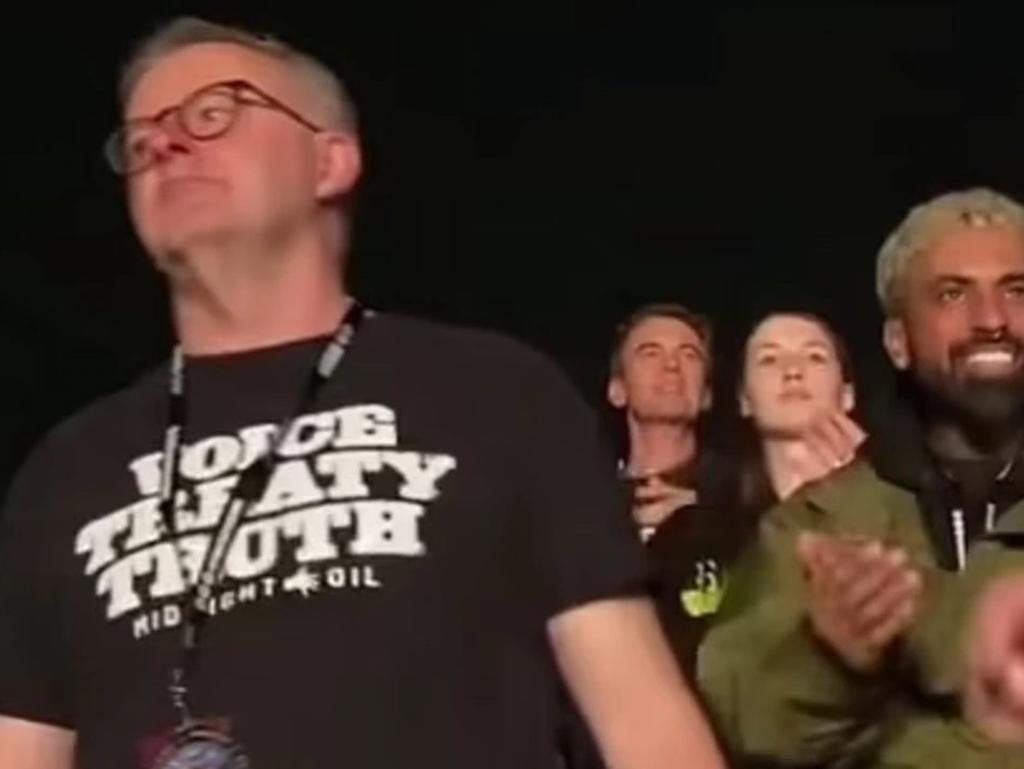
Coming back to the Prime Minister, Albanese has repeatedly stated that The Voice is not about reaching the above-mentioned treaty, yet he has recently been photographed wearing a shirt with “Voice, Treaty, Truth” displayed on it at a Midnight Oil Concert. He has also been very upfront since his election about his desire to implement the Uluru Statement “in full”, which of course contains the Treaty.
Quoting the full Uluru Statement further, “any reform must involve substantive changes to the Australian Constitution. A minimalist approach, that provides preambular recognition, removes section 25 and moderates the races power [section 51 (xxvi)], does not go far enough and would not be acceptable to Aboriginal and Torres Strait Islander peoples”.
“Substantive changes to the constitution” are not what the PM promised with The Voice or The Uluru Statement, yet he is evidently hoping to implement both.
This section of the statement also raises another key point that many Australians are unaware of which is that The Australian Constitution already contains a section that gives parliament permission to do what The Voice proposes.
In The Constitution, under “Part V – Powers Of The Parliament”, Section 51, xxvi, the parliament has “power to make laws with respect to the people of any race for whom it is necessary to make special laws.”
Since the power to make laws for “people of any race” is already enshrined in The Constitution, The Voice couldn’t just be about achieving that, otherwise, what would be the point of it? Something more substantive is likely to be in the works. Is a treaty the full extent of it or is there more?
It’s no secret that the PM has always been a big advocate for Australia becoming a Republic, but it seems that he has actually been laying the groundwork for a Republic to be established under his Government.
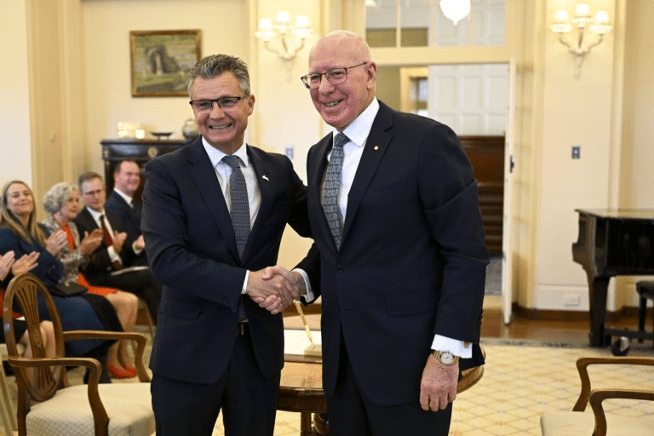
In 2022, Matt Thistlewaite was sworn in as Australia’s first-ever “Assistant Minister for The Republic of Australia” by Mr Albanese, a position that he created shortly after he took his new role.
If The Voice was successful, its momentum could likely carry the country into a push for an Australian Republic. A referendum, like the one Australia had in 1999, would become the next step.
Assistant Minister Thistlewaite has even said as much,
Professor Warhurst, a former chair of the Australian Republic Movement also supports the notion that “The Voice to Parliament, in a way, will help the republican movement” and Dr Cindy McCreery of The University Of Sydney also confirms that “we need to wait until the Voice to Parliament is resolved before we get on to really openly discussing becoming a republic.”
The warning signs for a Republic are visible, but the really key motivator here is that establishing a Republic requires the creation of a new Constitution.
This document would be drawn up by the “politicians of the time”, without the input of the Australian Public. Exactly like The Voice, Australians would be asked to vote “Yes” or “No” to becoming a Republic and those in parliament would work out all the details of the new constitution once the “Yes” Vote prevails.
It is quite likely that, even with Australians voting against The Voice now, if they voted for becoming a Republic later, The Voice and The Treaty would still be written into this new Constitution due to the politicians of the time being in favour of both.
In the same way that The Prime Minister has appealed to the compassionate side of Australians and put the fear of appearing “racist” and being on the “wrong side of history” in the mix to steer voters in his direction, he would almost certainly try to boost anti-royal sentiment in Australians or, at the very least, the desire for total independence from the monarchy, in order to sway voters his way in a Republican Referendum.
Even for those Australians that are not particularly pro-royal, which is probably a fair portion of Australians, it’s clearly very important to think long and hard before opting to become a Republic – another irreversible change. The full ramifications of that are not well discussed and it’s fair to say that even if a discussion does occur they will be, at least with the current PM, massively played down or blatantly denied.
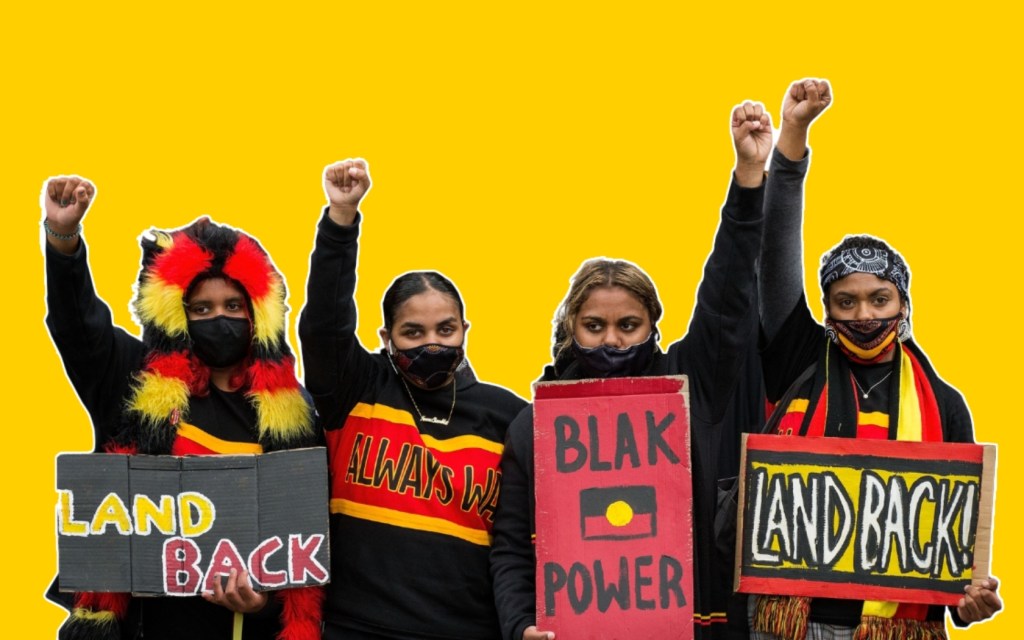
So, could we see Albanese’s Australian Republic converge with the likes of a “Blak Republic” voiced by Lidia Thorpe? Could we see a “pay-the-rent” scheme emerge from all of this?
Well, two things can be said. First: Once The Voice and Treaty are enshrined in The Constitution, Republic or not, they cannot be removed. They become supreme laws, unlike standard laws passed through parliament which can always be changed. So, once they are there, they can only grow stronger and pass more legislation which the Australian Public will have no say in and which may not benefit the Australian Public at all.
And second: If Australia votes to become a Republic, a new constitution will be drawn up and it’s highly likely that our vote against The Voice and Treaty now could become completely redundant later in a Republic of Australia.
Is it worth the risk voting “Yes” to either proposition?
Before finishing this article, it’s worth noting that, surrounding Constitutional Change in Australia, there has been no discussion surrounding a Bill Of Rights, or lack thereof.
Nearly all Common Law Nations have a Bill Of Rights enshrined in their Constitution that safeguards the individual and human rights of its citizens and sets clear boundaries that governments and corporations cannot cross – usually for the protection of citizens against the potential for tyrannical government and corporate monopolies to take hold of their nation. The United States Of America’s Bill Of Rights is often referenced in regard to this topic.

It turns out that Australia is the only Common Law Nation without a Constitutional Bill Of Rights. What this means is no supreme law exists to safeguard the human rights of the Australian people. Theoretically, laws can be passed that violate our rights and they would be completely lawful. The Australian Public would also, once again, get no say in the matter.
Perhaps, instead of The Voice, it’s time to have the discussion about putting into our Constitution a Bill Of Rights that protects all Australians of every race – what do you think?

 Your Truth Seeker
Leave a comment